

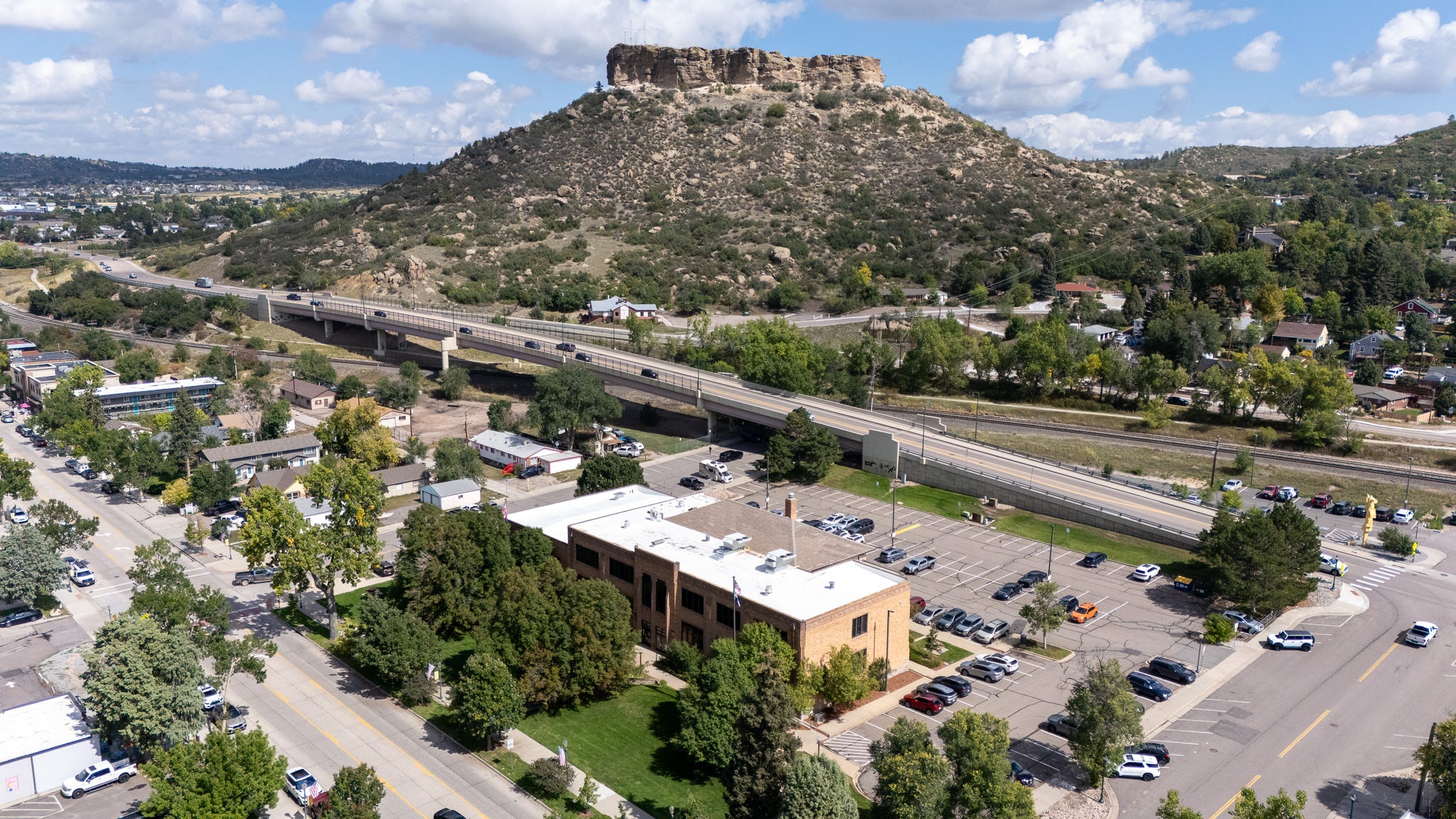
The Douglas County Board of Education will ask voters to approve a $54 million mill levy override (MLO) in the November 2026 general election. The district joins Denver, Jeffco and about a dozen other Colorado school districts in asking voters for a property tax increase to fund operational costs.
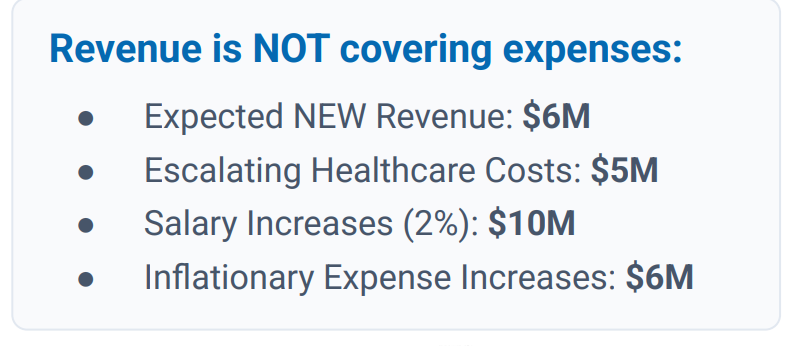
All of the state’s three largest school districts (Denver, Jeffco, and DCSD) are asking voters for a property tax increase in the form of an MLO. MLO dollars can be used only for operational expenses. Think teacher salaries, added security staff, and ongoing costs for academic programming. MLO funding cannot be used for capital projects like construction or facilities repairs.
Voters who live in the fourth largest school district in the state, Cherry Creek, just approved an MLO in 2024. Every four years, Cherry Creek asks voters to approve MLOs and bonds (see an explanation of the difference between the two below), and will likely come back to voters on schedule in 2028 with another MLO to further advance their operational funding.
Examining all four of the state’s largest districts along with a smaller school district, Littleton Public Schools, which is geographically adjacent to Douglas County, provides useful context for understanding DCSD’s MLO ask on the November ballot. Examining smaller districts in more right-leaning areas of the state is also useful to understand the full range of options available to districts in the face of a looming funding crunch.
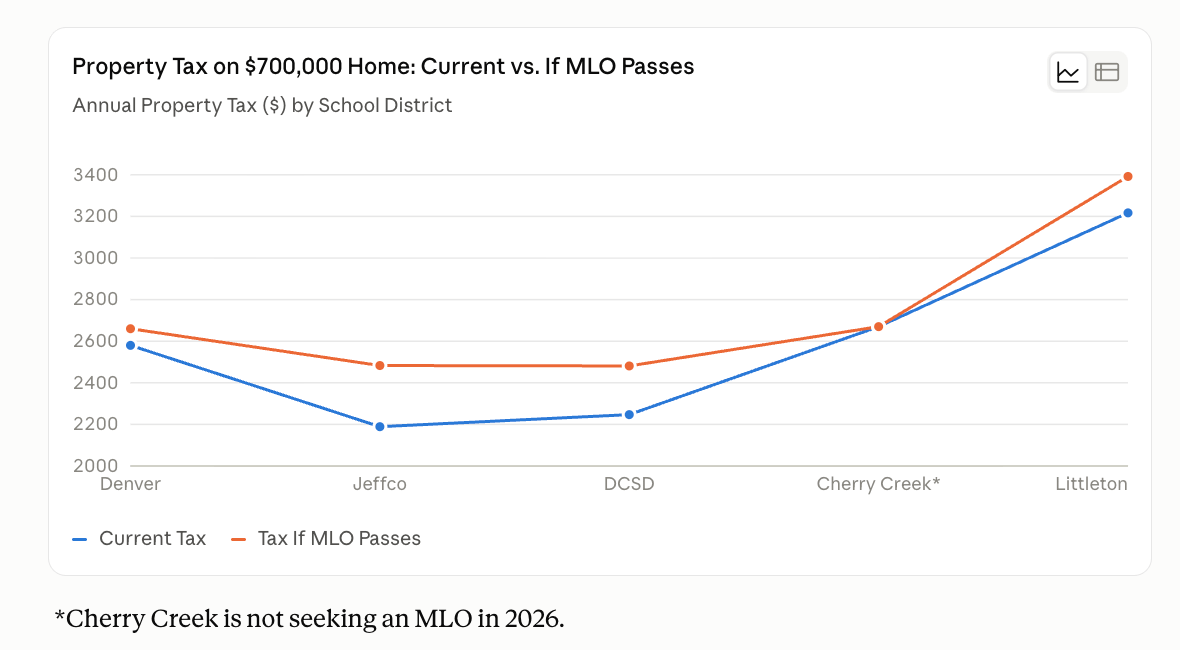
Douglas County voters approved mill levy overrides in 2018 and 2023, and those increases still leave the total mills for DCSD much lower than neighboring Denver, Cherry Creek, and Littleton school districts and a little higher than Jeffco at present. Keep reading to see how these mill levies translate into your property tax bill.
Why the need to increase revenues for operating expenses?
In Douglas County, three issues combine to drive the need for increased operating funds. The first is shared by all districts in the state, whether they are seeking new funding or not.
Inflationary Costs Combined with State Cuts
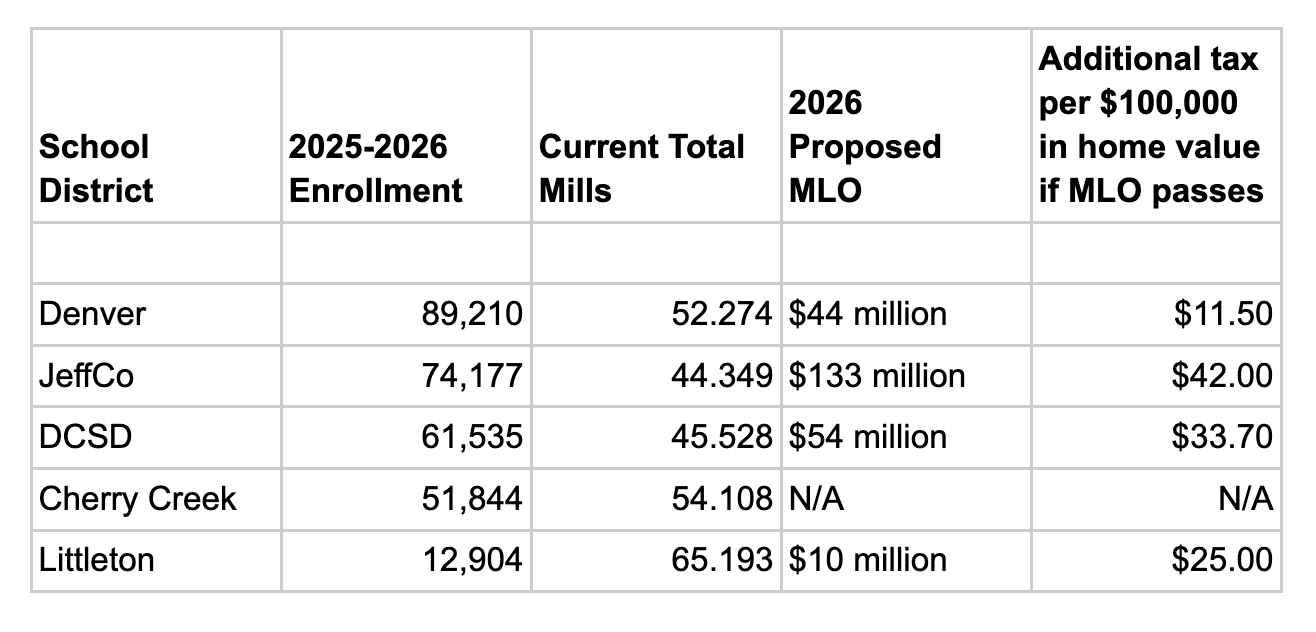
The specifics for each school district may vary, but all are feeling the squeeze of rising costs combined with the pressure to do more with less as the state reduces funding to account for an estimated $1.2 billion budget shortfall. DCSD predicts a $15 million shortfall in its operating budget by 2027-2028 as a result.
Over a decade with no increases
From 2006-2018, Douglas County School District did not ask for a mill levy override. Other districts did. This means that on top of inflationary increases in costs, DCSD is also climbing out of a deep hole in school funding that resulted from more than a decade without incremental increases. Costs increased but revenues did not keep pace during that time, and now the district is seeking to fill that funding gap.
Non-competitive teacher pay
Increasing teacher salaries has been a top priority for Douglas County. Since the 2021 school year and as a result of the 2023 MLO, teacher salaries in DCSD have increased by an average of $15,000. Turnover has decreased from 19.5% to 13.3% in that same time span.
However, despite these significant salary increases, in 2025-2026 the district’s average teacher salary of $77,156 was thousands of dollars behind neighboring school districts. Jeffco teachers averaged $84,392, Littleton Public School teachers averaged $88,804, and Cherry Creek’s teachers averaged $97,070.
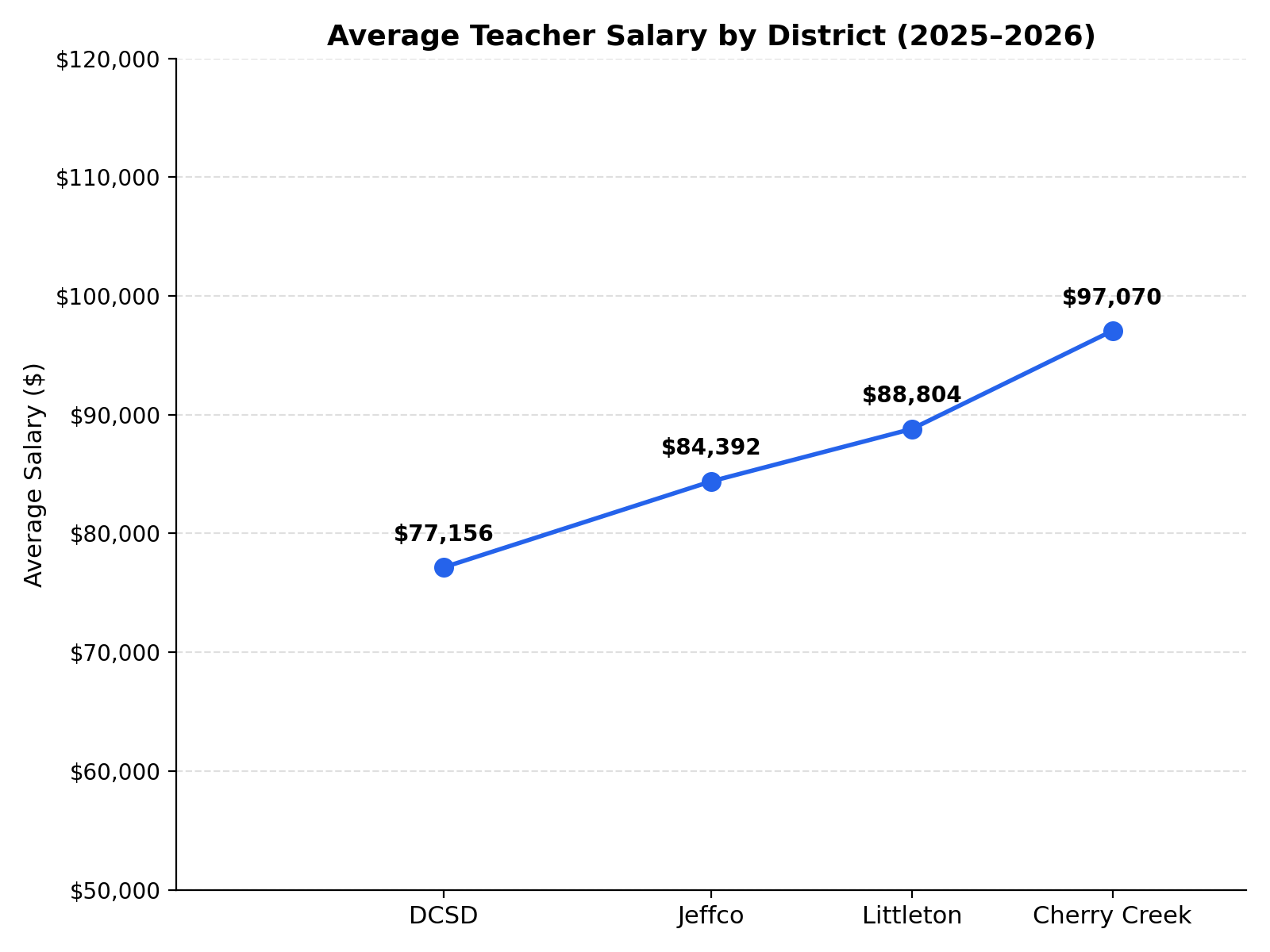
By driving an extra 10-20 minutes to work, DCSD’s teachers can increase their annual pay by about 10-25 percent at a neighboring school district. This means that, even after significant increases in DCSD teacher pay, the district is still vulnerable to talent drain.
Teacher salaries are such a priority for DCSD that, immediately following the vote to send the mill levy override to the November ballot, the Douglas County school board unanimously approved a second resolution. That second resolution ensures that, should the mill levy override pass, it will immediately trigger a 4% compensation increase for staff, retroactive to the beginning of the 2026-2027 school year (July 1, 2026).
What’s a mill levy override?
A mill levy is the tax rate local governments use to calculate property taxes. One mill equals $1 of tax for every $1,000 of a property’s assessed value. (Note: Assessed value is far less than the appraised or market value of a home.)
Mill Levy Overrides increase the property tax rate (the mills for schools) to raise revenue for ongoing operating expenses like teacher pay increases, salaries for additional security staff, and the cost of student programs. MLOs create operating revenue for ongoing expenses through voter-approved property tax increases.
Bonds fund capital expenses like new school buildings, renovations and repairs to existing buildings, and physical security upgrades. Bonds create capital revenue for one-time expenses through voter-approved debt.
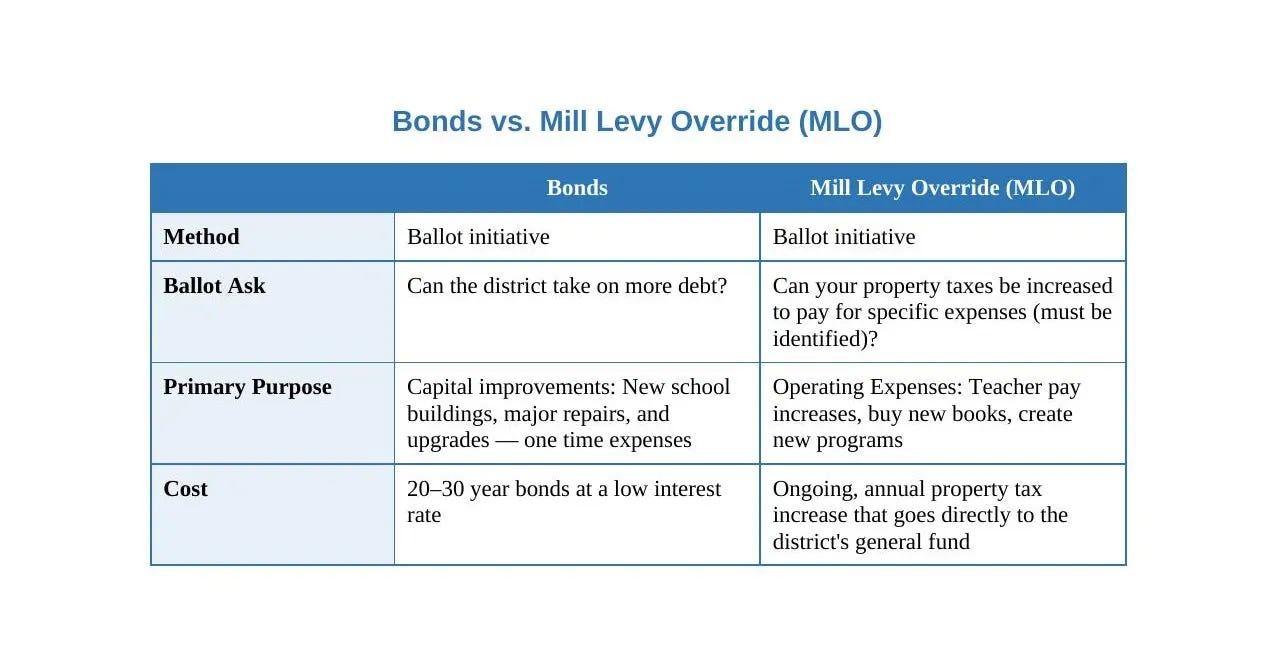
CAPTION: Source: Chalkbeat Bond Measures & MLOs
Both bonds and MLOs increase the Total Mill Levy for a school district. Bonds typically create a dedicated debt-service mill levy. That debt-service mill levy adjusts annually based on the tax base and the dollars needed for debt service (capital and interest payments on the debt). When the debt is paid off, the debt-service mill levy automatically expires. MLOs create a set mill levy that does not change over time and expires based on the date defined on the ballot initiative voters approve.
But property taxes have increased. A lot.
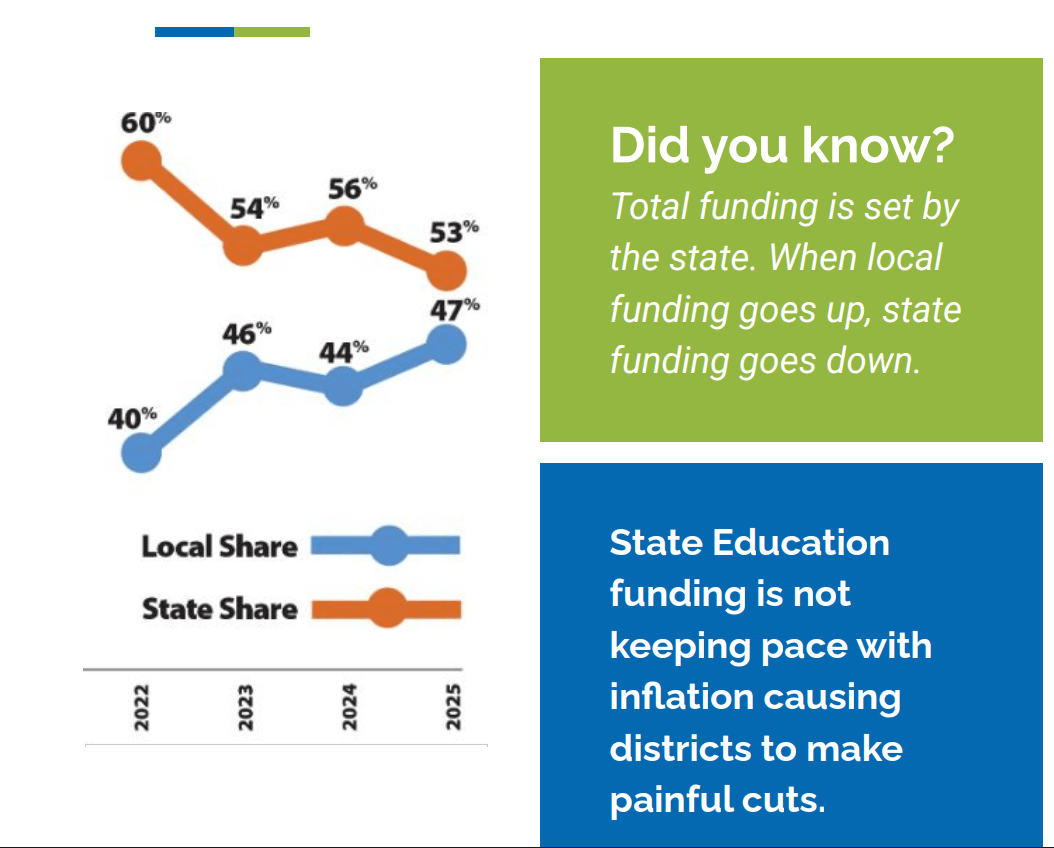
One of the most common questions people ask, according to DCSD Superintendent Erin Kane, is why the district needs to ask for a mill levy increase even though property valuations have increased substantially in recent years. She explains that as revenues from property taxes have increased, the state’s contributions to per pupil funding have decreased, leaving the school district with no net gains in revenue despite the higher property taxes.
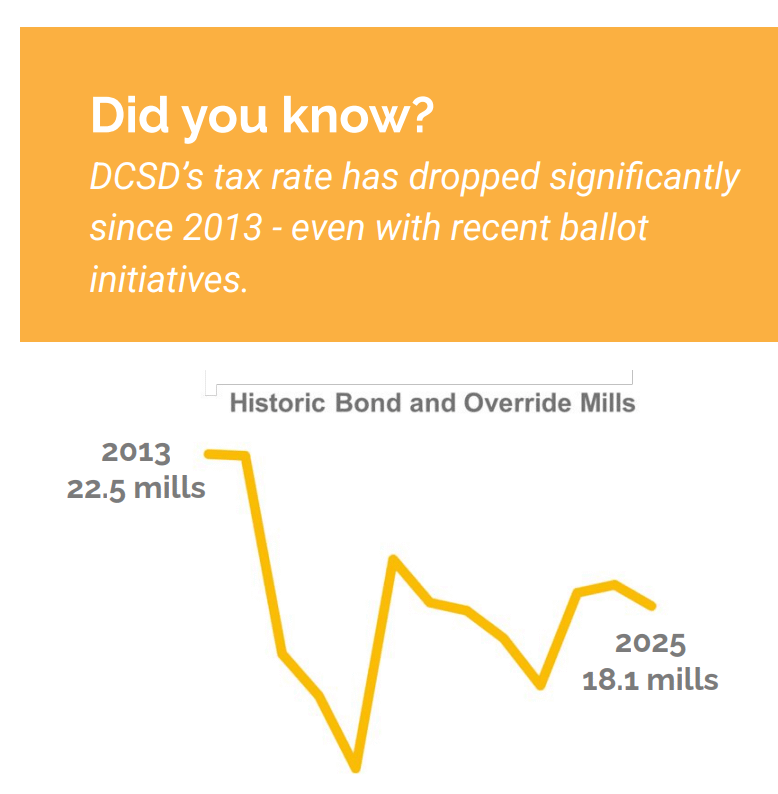
Also, despite the 2023 voter-approved MLO for Douglas County, the district’s current override mills (18.1) are still below 2013 levels (22.5). In 2013, the total mill levy for DCSD was 48.277. Today, 13 years later, it sits at 45.528. This is a result of that decade-long drought from 2006-2018 for MLOs. During essentially the same time period (2007-2017) there were also no new bonds. MLOs and Bonds both increase a school district’s total mill levy. Bonds are long-term funding, and when they are paid off, the total mill levy drops. When that bond funding rolls off and is not replaced with additional bond funding for more than a decade, the total mill levy can drop as it has in DCSD.
Cherry Creek’s regular schedule of small funding increases helps that district keep up with inflation and changing needs. New bonds replace older bonds that are paid off, and create a smoother, more incremental school funding schedule. DCSD’s situation, where it retired old bonds without replacing them for over a decade, results in the sharper funding increases the district has seen in the past few years. It’s analogous to deferred maintenance – in fact, in many cases, that’s exactly what it is because the district has not regularly come to voters with funding asks. In DCSD’s case, the district is making up for that deferred maintenance at the same time it faces cuts in state funding that all districts are experiencing. Those districts that increased MLOs, when Douglas County was not doing so, now have less ground to make up in the face of those same state funding cuts.
How does the mill levy translate to your property tax bill?
This is where we start crunching the numbers. Currently, the state applies a standard school assessment rate to residential property of 7.05%. Mill levies for school districts are calculated on those school assessed values.
According to Zillow, as of 7/31/2026, the average home value in Douglas County was $705,114. We’ll use $700,000 for ease of calculations.
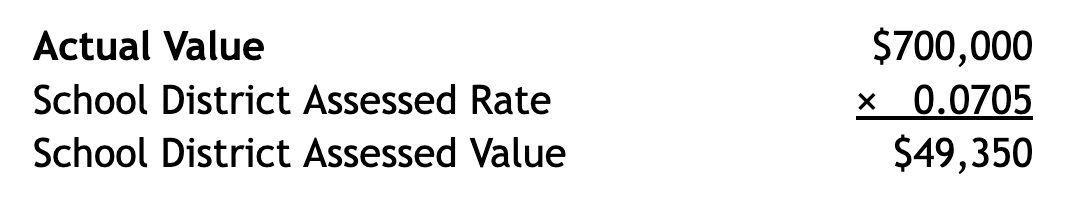
Whether you live in Douglas, Arapahoe, Jefferson, or Denver County, the assessed values for your home remain the same. A $700,000 home in any county in Colorado will have a School District Assessed Value of $49,350.
What differs across counties is your mill levy, and that determines the taxes you pay.
So for a $700,000 home in Douglas County at the current 45.528 mills you pay about $2,247 per year in property taxes to the school district. DCSD says the proposed MLO will cost about $33.50 per 100,000. So if the proposed MLO passes, the cost for that “average” $700,000 home in Douglas County would increase by about $235 (a little more than 10%) to $2,481.
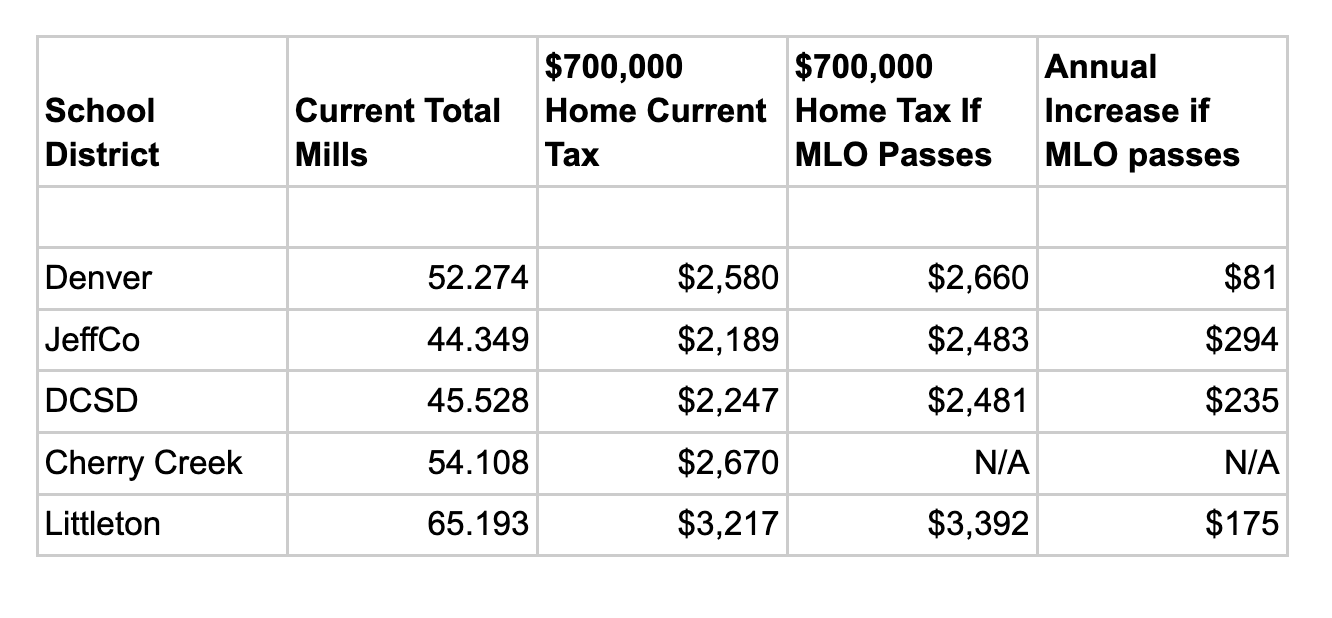
The table above begs a question: Why is the estimated tax increase so similar for DCSD vs. Jeffco when the value of Jeffco’s proposed MLO ($133 million) is more than double that of DCSD ($54 million)? The difference lies in the size of the tax base. The larger the tax base, the less individual taxpayers need to contribute to reach a given total. Because Jeffco has many more homes and businesses contributing to the dollar amount increase, each payer contributes less individually compared with DCSD where the increase is funded by fewer taxpayers. For that same reason, an MLO to give Littleton Public Schools $10 million in property taxes will cost each resident $175 per year while DCSD gets more than 5 times as much ($54 million) for just $50 more per resident. The tax base for Littleton schools is much smaller than for Douglas County schools.
What are other districts doing?
Our analysis has focused on the four largest schools in the state (DCSD is 3rd) plus a contiguous school district, Littleton Public Schools, which is much smaller. All of those school districts are using MLOs as a tool to address operational funding issues.
With the exception of DCSD, those schools are all in left-leaning communities. So it’s fair to ask: What are school districts in more right-leaning communities, like Douglas County, doing in the face of inflationary costs and the cuts to state funding all school districts are facing?
One complicating factors in answering that question is finding comparably-sized school districts in right-leaning communities in Colorado. The largest schools in El Paso and Weld counties, reliably conservative strongholds in the state, have enrollments of 20,000-25,000 students – about one-third the enrollment of DCSD. Each of those counties has multiple public school districts; Douglas county has just one. Despite the differences, these are the most comparable schools to answer the qeustion.
El Paso County
School District 49, serving northeast Colorado Springs, Falcon, and Peyton, is one of the largest school districts in El Paso county with 26,423 students enrolled in 2025-2026. District 49’s total mill levy is 45.649, just slightly higher than DCSD’s 45.528. In January, District 49 announced a financial exigency based on a $9 million funding gap and only $2 million in reserves. In January 2026, in the face of a requirement to balance its 2026-2027 budget, D49 preemptively announced $1.8 million in cuts to teacher salaries and benefits for the 2026-2027 budget year. Those cuts came on the heels of 2025-2026 school year cuts on the order of $9 million to administrative staff, supplemental programs, and staffing and contract negotiations, according to reporting by the Denver Gazette.
Colorado Springs District 11 lies south of District 49 and serves 23,458 students in El Paso County. While D49 serves rural and newer suburban areas in the Colorado Springs area, District 11 serves the established urban core of the city. The total mill levy for D11 is a remarkably low 37.695.
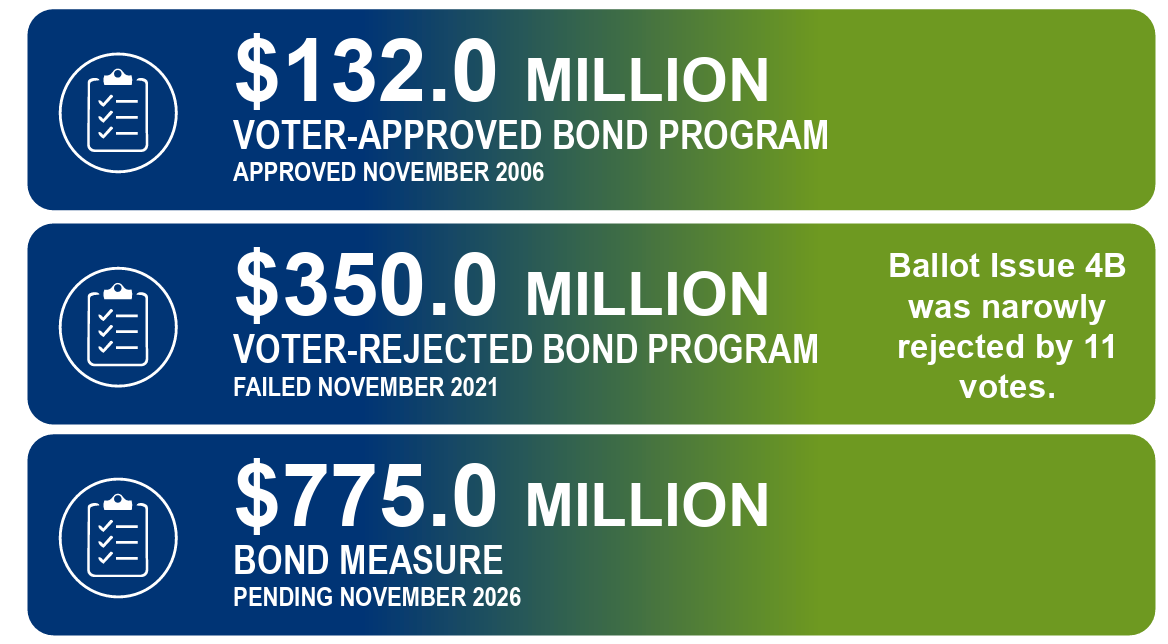
The last time D11 passed a bond initiative was two decades ago in 2006. In 2021 a proposed $350 million bond failed to pass by just 11 votes. Now a $775 million bond measure is on the ballot for November 2026. School board directors have said that the bond will pay for repairs at every school in the district. The district’s oldest buildings were constructed in the 1950’s. Some have no HVAC. Others require a total rebuild.
Passing the bond would free up dollars that are currently dedicated to facilities so they could be redirected toward pay increases for teachers – which is unusual since funds for capital expenditures (bonds) and operational expenses (MLOs) are typically acquired through separate voter-approved means. But after the 2021 bond initiative failure, the D11 school board bypassed voter approval and funded about $130 million in critical school building improvements through certificates of participation (COPs).
COPs are a debt obligation secured by a lease agreement. They do not increase taxes, but debt service must come from existing revenue. District 11 has been using general fund revenue to service that COP debt. That explains how passing the $775 million bond would free up dollars for operational costs – the bond would pay off the district’s COPs. Passing the bond on D11’s 2026 ballot would increase the district’s total mill levy to an estimated 43-45 mills, a rate that is more consistent with nearby school districts.
Weld County
The largest school district in Weld County is Greeley-Evans 6 with 22,778 students in 2025-2026. The mill levy in Greeley-Evans 6 is 47.615, slightly higher than DCSD’s 45.528.
Greeley-Evans 6 does not have an MLO or bond on the ballot in 2026. The district receives $20-30 million per year from a 2022 MLO renewal that sunsets in 2032. Also, in October 2025, Greeley-Evans 6 bypassed voters and approved $43 million in COP’s for construction of a new administration building. Payments on the debt for the COP’s will require annual appropriation from operating funds. Like D11, Greeley-Evans 6 will be forced to use general fund dollars to service the debt from its certificates of participation.
Zooming Out
Many schools in Colorado are facing similar challenges. Reduced state funding combined with rising costs is putting the squeeze on operational budgets for school districts statewide. On November 3, voters will decide how they want their local school districts to respond.
Related Articles:
Funding Douglas County Schools: The Numbers Behind the Asks

Most of us have heard that “public schools are funded through taxes” — but few have ever looked closely at what that actually means. When DCSD says it can’t afford competitive teacher salaries, or that programs have waitlists, what’s really going on?
Sources and Additional Reading:
Douglas County News Press: DCSD looks at teacher, staff compensation increases
Understanding Property Taxes in Colorado
DCSD: 2026 Mill Levy Override Resources
Chalkbeat: What’s a bond measure? How do mill levy overrides work? We explain.
Colorado Department of Education Mill Levy Tables
Colorado Department of Education Staff Statistics
KKTV11: Colorado Springs D-11 School Board votes to pass $775 million bond measure to Nov. ballot
A Citizen’s Guide to the Colorado Springs School District 11 2026 - 2027 Budget
D49 Board Declares Fiscal Exigency Ahead of Workforce Program Cuts to Balance Budget
Colorado Springs D11 May Present Voters with $775 Million Bond Measure
Colorado Department of Education Staff Statistics
Colorado Department of Education 2022-2023 Personnel Turnover Rate