Is The New Biochar Facility Meant for Zebulon Contamination?
Facility price tag went from $3 million to $8 million, and it could tackle some key problems for Zebulon land
Douglas County has two major projects running simultaneously in its northwest corridor this year: the Zebulon Sports Complex and the first county-run biochar facility in the nation. Zebulon is the proposed sports mega-complex to be built on 46.5 acres in Sterling Ranch, on land that was once part of a century-old explosives manufacturing facility.
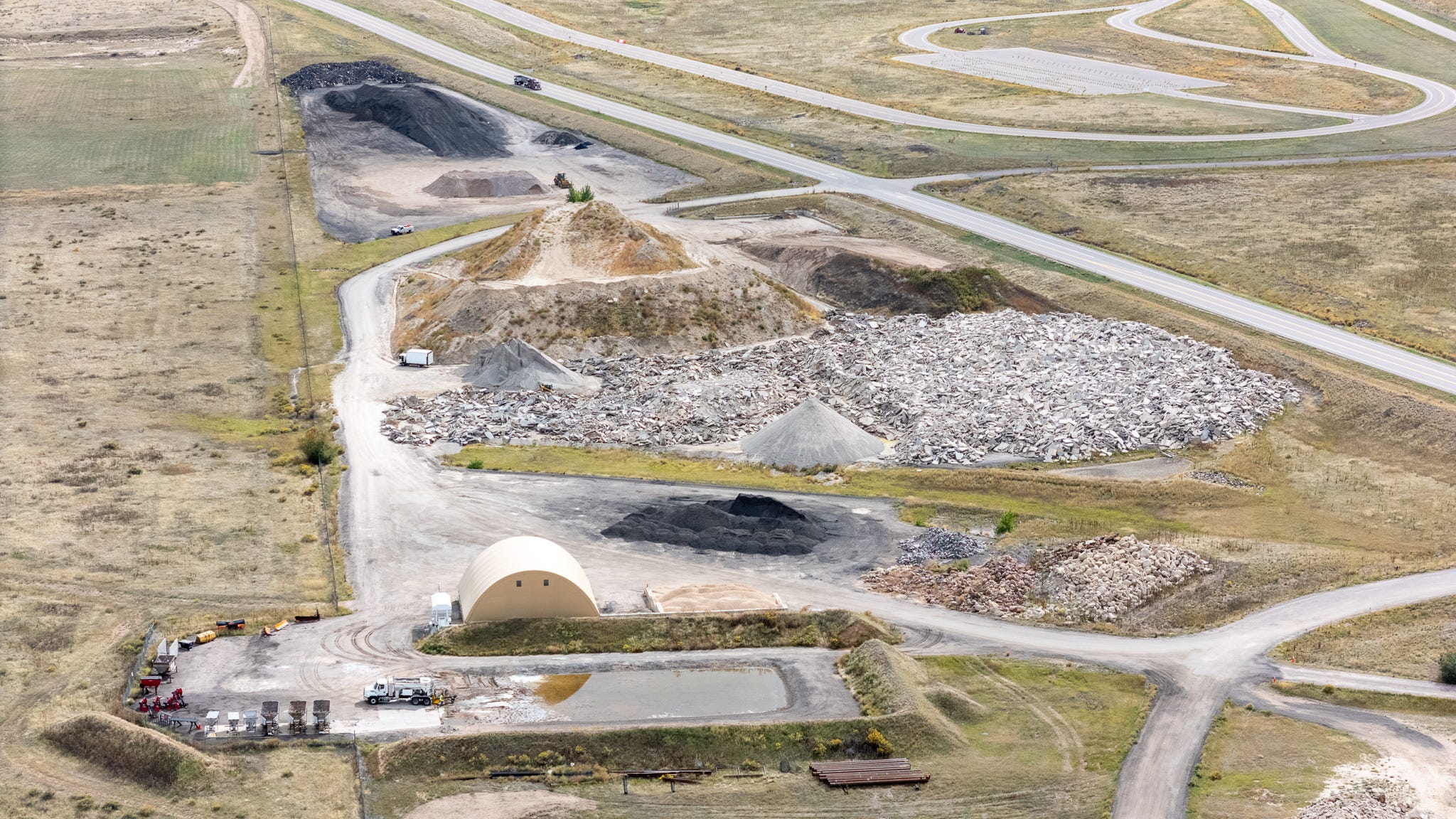
The Douglas County Biochar and Waste Diversion Site is an $8 million facility in Sedalia that broke ground in July 2025. County officials describe it as the first county-operated biochar plant in the United States.
The county has presented these as separate initiatives serving distinct purposes. Zebulon is about youth sports. Biochar is said to be about environmental sustainability and potentially generating revenue.
But a quick glance at the main environmental concerns about Zebulon and the primary uses for a biochar facility’s products point to a connection between the two projects.
A Brief Explainer on Biochar

A biochar facility takes things like wood debris and feeds it into a reactor to be heated at high temperatures without oxygen, which leads to a rapid decomposition. The resulting product is a type of charcoal that can be mixed with soil, among other applications. Biochar has tremendous soil additive benefits. Biochar is hailed as an environmental win-win: it is a sustainable way to dispose of wood, particularly wood remnants from wildfire mitigation, and the resulting biochar helps capture greenhouse gases, improve crop yields, clear soil contaminants, and much more.
Zebulon’s Once and Future Contamination Problems
As we have previously reported, the parcels designated for Zebulon were once part of or adjacent to a 1,500-acre explosives manufacturing complex operated by DuPont, and then Chemours, from 1908 until 1989. This was not a typical industrial site. Over more than 80 years, the facility manufactured dynamite, nitroglycerin, pentaerythritol tetranitrate (PETN), dinitrotoluene (DNT), and a range of other explosive compounds and chemicals.
In October 2025, a controversial land exchange put 46.5 acres of this potentially contaminated land back in the hands of Douglas County taxpayers.
In 2010, a detailed report on contaminated areas inside the former Chemours land was completed by the US Department of Health & Human Services. The findings were significant.
Arsenic was found at concentrations up to 3,500 mg/kg. The EPA’s residential cancer risk screening level for arsenic is a staggeringly lower 0.39 mg/kg. Lead was found at up to 130,000 mg/kg at the surface — 325 times what you might expect at a residential site. The estimated cancer risk from arsenic exposure for industrial workers exceeded the upper bound of the acceptable range. The report found that lead concentrations at this level could harm the developing fetus of pregnant workers who came into contact with the soil.
At former DNT storage areas near the site, 2,4-dinitrotoluene was found at concentrations above acceptable ranges for industrial workers. And nitroglycerin, a sensitive explosive material, was a documented historical contaminant around the chemical plant.
Two critical points about all of these findings: 1) At least some mitigation has been done on the site since 2010; to what extent, on what parcels, and for what contaminants is not especially clear; 2) the 2010 inspection modeled exposure risks for trespassers, industrial workers, and construction workers. It did not model exposure for children — because children were not expected to be present on inactive, industrial land. At the proposed Zebulon sports complex, children would be the target demographic.
Clarifying What A 2022 “Closure Letter” Actually Means
Douglas County’s Zebulon webpage quotes a December 2022 CDPHE closure letter prominently stating, “no further remediation is required at the Site.” This framing requires important context.
A “conditional closure” under CDPHE’s policies is not a declaration that a site is clean. It is a finding that contamination no longer requires active remediation — provided that specific land use restrictions remain legally in place. The closure was granted because Chemours placed a Notice of Environmental Use Restrictions (NEUR) on the property: essentially a deed restriction limiting how the land can be used and requiring ongoing maintenance of fencing, signage, and protective well caps.
The entire closure framework was designed around restricted industrial and commercial uses. No part of the restrictions evaluated the site against a standard appropriate for a children’s sports complex.
What the County’s Own Environmental Assessment Found
When land negotiations began for Zebulon, Douglas County conducted its own environmental assessment. The county’s Zebulon FAQ acknowledges this — and reveals something important:
“The County completed its own environmental assessment and found four areas where chemicals were still present.”
The FAQs section states those areas are not included in the Zebulon parcel — with one exception: “a small amount of PFAS (a chemical commonly found in cookware and firefighting foam) – which, at this time, is not required to be remediated.”
The county confirmed active contamination on or near the Zebulon parcel during its own due diligence. PFAS are compounds the EPA classifies as hazardous at extremely low concentrations, and which have no safe level of exposure established for children.
We have also reported an email from county staff in June 2025 indicated known contamination issues and anticipated problems with the Zebulon site.
All of this is to recap that clearly contamination on the Zebulon site has been a known factor in the development of the sports complex, but a solution for how to explicitly deal with the contamination has not been on the agenda for the Board of County Commissioners.
Enter The Biochar Facility
In July 2025, the same period the Zebulon land transfer was being finalized and contamination questions were becoming public, Douglas County broke ground on its originally $3 million, later reported as $8 million by the Denver Gazette, biochar facility. The new facility sits off Highway 85 in Sedalia, about five miles south of the Zebulon site.
At the groundbreaking ceremony, Commissioner Abe Laydon made a specific claim worth noting:
“These magical carbon products can... remove forever chemicals like PFAS.”
PFAS is the only county-confirmed contaminant at the Zebulon parcel and it was cited specifically by a county official at the biochar facility’s launch.
What Biochar Can Do For Zebulon
Biochar has several applications for cleaning up soil contaminants documented at the Zebulon site:
Arsenic and lead are biochar’s strongest use cases. Biochar reduces these heavy metal quantities in soil.
DNT (dinitrotoluene) is a compound similar to TNT, and biochar has documented effectiveness in immobilizing these explosives through carbon-to-carbon molecular interactions.
PFAS, a type of “forever chemical,” can be remediated by biochar to immobilize rather than destroy the PFAS compounds; meaning the chemicals remain in place rather than being eliminated, but that still puts the PFAS in a much more manageable state than underneath a little league field, unaddressed.
A Connection the County Commissioners Have Not Advertised
When you consider that none of the current County Commissioners ran for office as innovative environmentalists - biochar’s major proponents see it as a way to combat climate change - it raises the question of why they chose to pursue a first-in-the-nation environmental remediation facility at taxpayer expense. Three facts are hard to ignore:
The biochar facility broke ground in July 2025, the same period when Zebulon contamination questions became public and the associated land transfer was being finalized. Both Zebulon and the biochar facility had been in the works for years by that time.
The county’s own environmental assessment confirmed PFAS contamination on or adjacent to the Zebulon parcels. PFAS remediation is one of the major use cases for biochar soil additives.
Commissioner Laydon specifically highlighted biochar’s capacity to address PFAS at the new facility’s public launch a short drive south of Zebulon. The biochar produced in Sedalia can arrive at the Zebulon site in about 10 minutes.
Here Are The Questions We Need Answered
The products of a biochar facility could do a tremendous amount of good for Douglas County and serve as a model for more environmental sustainability elsewhere. It is worth noting that Aurora Water, which ultimately supplies the water for Dominion Water and, therefore, Sterling Ranch, also pitched in to help build the biochar facility in Sedalia.
But despite the upsides of biochar, the connective tissue between the problems with Zebulon and the motivation for biochar is compelling:
Will Zebulon land be remediated using the new biochar facility’s products?
Was the taxpayer-funded biochar facility built to make Zebulon environmentally feasible?
What is the County going to do about any PETN and nitroglycerin contaminants documented at the site that cannot be remediated through biochar?
Why did the price tag of the biochar facility jump from $3 million to $8 million in a year?
Sources and Suggested Reading
Report on Dupont Site, US Department of Health & Human Services + Colorado Department of Public Health & Environment, 2010
Article on Biochar Applications, Massachusetts Institute of Technology (MIT)
“A critical review of biochar for the remediation of PFAS-contaminated soil and water,” Science Direct, 2024


It is important to note that NONE of the contaminants are removed with bio char. They are sequestered, meaning they are adsorbed to the surface of what is essentially activated charcoal, a substance that has charged sites in its structure thst strongly hold some organic and inorganic substances.
The stuff is still there, and can be released under certain circumstances, like high heat.
All good questions at the end.