

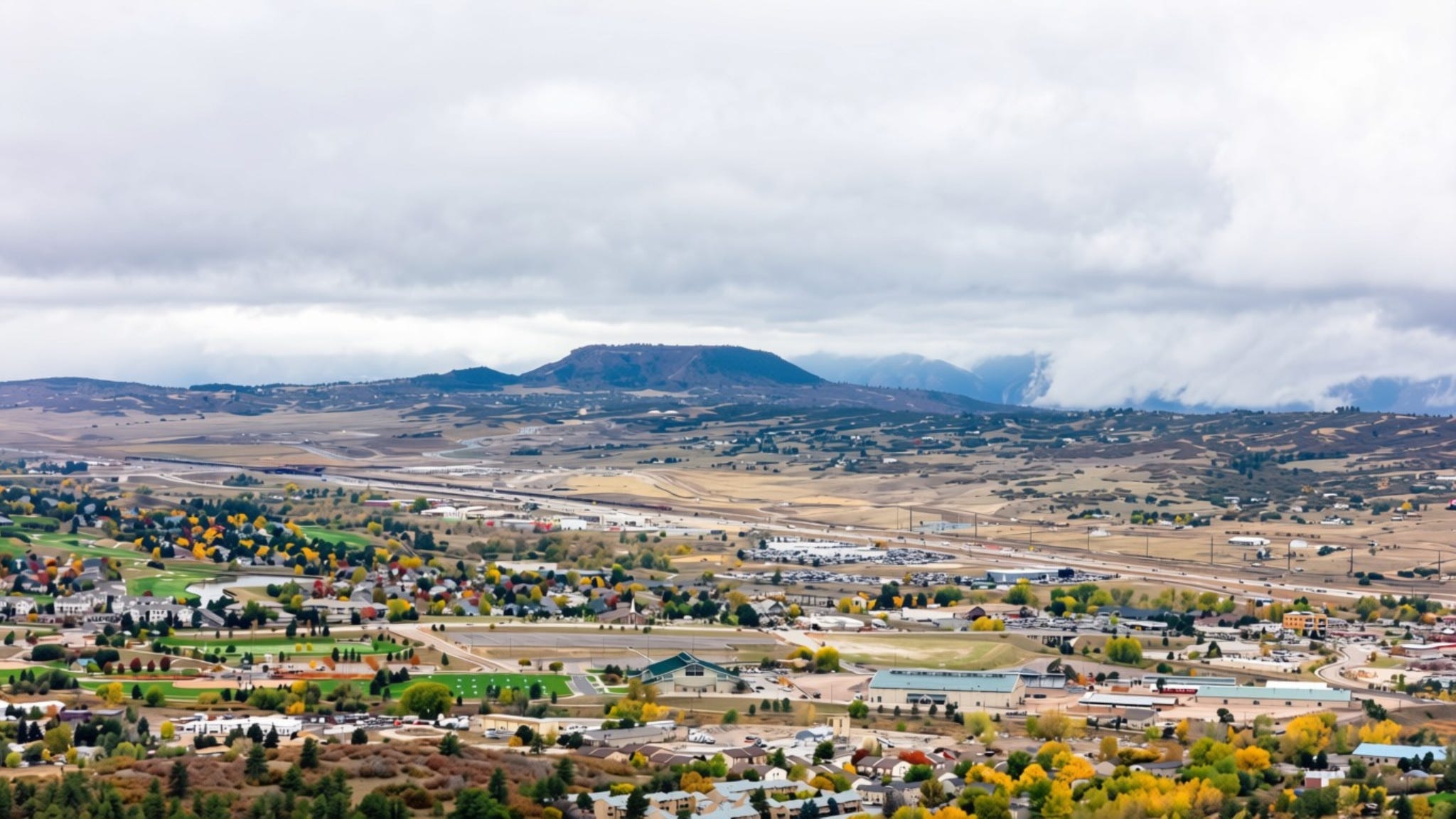
Castle Rock manages roughly 130 miles of trail, and about 35 of those miles are dirt and open to bikes - the Stewart Trail loop at Ridgeline Open Space and a track at Philip S. Miller Park among them. When the Town builds or repairs natural-surface trail, it hires professional external contractors.
Hiring contractors is standard practice, but the question resident Jon Lontai has been asking since spring is whether the Town has ever sought a partnership with nonprofit trail organizations. Castle Rock has exclusively hired for-profit contractors when a robust industry of nonprofit trail builders is both available and an industry norm.
Colorado has roughly 40 nonprofit trail organizations. Jefferson County specifically lists COMBA, the Colorado Mountain Bike Association, as one of its preferred partners on trail building.
In September 2025, the Castle Rock Town Council approved an $859,965 contract with Timberline TrailCraft to build the first trails at Lost Canyon Ranch Open Space. TrailCraft is a for-profit entity and the contract, almost a million dollars, never received a bid from a nonprofit alternative.
One resident is pushing the nonprofit option
Jon Lontai is a hiker and mountain biker with strong ties to the mountain biking community, including serving as a coach with biking nonprofit. He is a concerned resident of Castle Rock who frequently uses public trails. He raised the idea of working with nonprofit trail groups at a Parks and Recreation Commission meeting in May 2026, then spoke during public comment at Town Council on June 2, June 16 and July 21. He said he also met with Town Manager David Corliss and Parks Director Jeff Brauer over the summer.
His request is narrow: he hasn’t asked the Town to drop its contractors or sign new agreements with nonprofit providers; he just wants to see the Town consider bids from nonprofit contractors.
Lontai points out that if the town established a working relationship with a trail advocacy nonprofit organization, such a partnership could help with planning, maintenance, and volunteer training. “Castle Rock is leaving a lot of resources on the table by not working with these existing groups,” Lontai said via email.
In a July 23 email to Council, he asked that the decisions be “discussed openly and not behind closed doors,” and wrote that a nonprofit partnership would still leave Parks staff in control of project management while stretching Castle Rock’s tax dollars further. He included contact information for the executive directors of the Colorado Mountain Bike Association (COMBA) and Medicine Wheel Trail Advocates, a Colorado Springs nonprofit that has built and maintained trails in the Pikes Peak region since 1991.
Neither Council nor the Parks and Recreation Commission has put the subject on an agenda.
Savings from the nonprofit option
Two numbers give a sense of the value proposition for nonprofit trail building.
The first comes from Medicine Wheel. Lontai asked its executive director, Cory Sutela, what the group would charge to survey the roughly 18 miles of track at Ridgeline and Philip S. Miller and prioritize the required maintenance. Sutela replied that a detailed assessment would likely run $4,000 to $5,000 depending on scope. That price includes walking and surveying trails plus producing a map and report. Lontai gave the exchange to Council on July 21 and suggested the Town request proposals from a few for-profit firms for the same scope so the costs could be compared.
The second comes from Conifer High School, which has been planning a trail system on its 105-acre campus in partnership with COMBA. According to the student newspaper, CHS Today, the school priced three options for an initial two-mile system. Volunteers with rented machines for the hard sections would cost about $37,000. A COMBA contractor working alongside volunteers would cost about $71,000. An outside contractor would cost about $239,000, by comparison.
Neither number proves Castle Rock is overpaying. Both suggest the comparison Lontai is asking for would be worth producing.
Castle Rock’s existing partnership raises questions
Castle Rock does have one existing nonprofit partnership worth exploring. The Castle Rock Parks and Trails Foundation describes itself in its federal tax filings as the nonprofit partner of the Parks and Recreation Department. It raises money rather than building trails. Its largest recent project was the Possibilities Playground at Butterfield Crossing Park. The Foundation reported a $600,000 grant to the Town for the playground in 2023, and $6,000 in trail maintenance spending that same year.
The Foundation’s executive director, Marne Hansen, is its only paid officer ($22,885 in 2024). The Town’s staff directory also lists Hansen as Outdoor Coordinator in the Parks and Recreation Department.
The Foundation has been relatively dormant in recent years and, when active, has large swings in revenue and expenditures. Along with having overlap between Foundation and Town staff, it appears to be an irregularly utilized channel for raising funds for Town projects.
Castle Rock’s 2015 Parks and Recreation Master Plan directs the Town to pursue partnerships with other agencies, with user groups, and through public-private arrangements, and says new partnerships will be needed to carry out its various plans for parks and recreation.
Where the money stands
Castle Rock’s Parks and Recreation Capital Fund is built mostly on development impact fees. It now carries interest-only payments of about $3.67 million a year from 2026 through 2029 on certificates of participation issued for a new Sports Development Center, which is more than the fund’s budgeted 2026 revenue of roughly $2.98 million. This means there is currently a half-million dollars in funding gap for the parks capital fund between what it takes in and what it owes on debt service. Parks impact fees are also falling, from about $4.5 million in 2024 to a budgeted $2.94 million for 2026.
A pooled Park Improvements line of $1.5 million a year, paid from lottery proceeds and the Douglas County Shareback, could cover trail repair, but the town budget doesn’t show how it’s spent. The Ridgeline Open Space doesn’t appear in the 2026–2030 Capital Improvement Plan at all. Philip S. Miller park is mentioned in the document, but none of its projects are for trail maintenance for the robustly used trail network.
With less money coming in, what the Town pays per mile of trail work matters more than it did even a few years ago.
The Lantern’s records request
In August, The Lantern filed a CORA request for Town communications about nonprofit trail organizations. The Town responded that the request was overly broad. Castle Rock’s CORA request system is also seemingly designed to only provide information to developers and external, for-profit entities. Making a CORA request for typical press-related work is not a clear option in the Castle Rock CORA intake sheet, unlike most government entities in Colorado.
Resistance to better value
Lontai has been pressing the issue for months with his Town Council and staff, advocating only for an examination of the best value for taxpayers, and yet leaders in Castle Rock have seemingly stonewalled the conversation. Most external contractors used by municipal governments are for-profit entities, largely because there is not always a passionate group of nonprofit channels for municipal services. That’s not true for the great outdoors: an entire industry segment of nonprofit trail builders exists precisely because people want to ensure a quality recreational experience.
So it begs the question: why are the Castle Rock Town Council and Parks staff not jumping at the opportunity to save money for taxpayers, deliver better value, and respond to shrinking revenues meant for recreation?
If they know the answer… they’re not telling.
Questions We’re Still Pursuing
Has the Town ever solicited or compared bids from nonprofit trail organizations for parks and recreation work? Does the professional-contractor requirement in its trail RFPs effectively exclude nonprofit crews?
How much has the Town paid trail contractors over the past five years, and for which projects?
What agreement governs the Foundation’s relationship with the Parks and Recreation Department, and how does the Town handle a staff member also serving as the Foundation’s paid director?
Has any Town official contacted the IMBA, COMBA, or Medicine Wheel about a partnership?
Does the Town intend to put nonprofit trail partnerships on a Council or Commission agenda?
Sources & Suggested Reading